AC Making Noise in Pasadena
In plain terms: A noisy Carrier AC or furnace in Pasadena 91101 to 91107 names the part: a buzz means the capacitor or fan motor, rapid clicking the contactor, a screech a blower bearing. Call Pasadena Carrier HVAC at (213) 513-5436 or book online and we match the sound to the fix before a slugging compressor self-destructs.
The short version
- Buzz/hum, fan dead: run capacitor or condenser fan motor ($150-$450).
- Rapid clicking/chatter: pitted contactor or low control voltage ($150-$450).
- Screech/grind indoors: blower bearing, loose wheel, or inducer motor ($300-$2,300).
- Bang/rattle outdoors: debris, loose fan blade, or failing compressor mount.
- A new sound is a same-week repair; a slugging compressor or grinding motor can self-destruct.
- Service area Pasadena ZIPs 91101-91107.
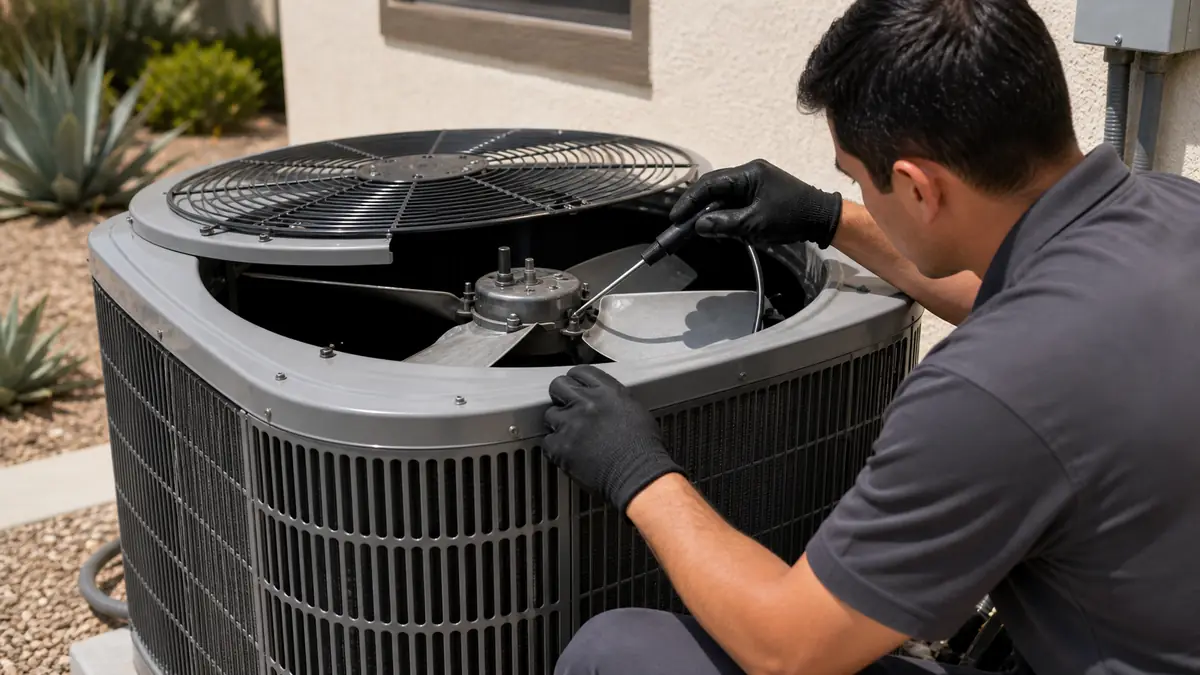
What does each Carrier AC noise mean?
Each sound maps to a mechanical or electrical part, so the noise is a diagnostic before we even open the cabinet. A hum with a dead fan is the capacitor or fan motor. A rapid click is the contactor. A high-pitched screech is a bearing. A rhythmic bang is something loose or a compressor in trouble. Pasadena's dense lots and Santa Ana winds add their own noises: blown debris and rattling panels that sound alarming but clear easily.
| Sound | Likely cause / first check | Cost lane |
|---|---|---|
| Buzz/hum, fan won't spin | Failed run capacitor or condenser fan motor | $150-$650 |
| Rapid clicking / chatter | Pitted contactor or low control voltage | $150-$450 |
| Screech / squeal indoors | Blower motor bearing or loose wheel | $300-$2,300 |
| Grinding from furnace | Inducer motor bearing | $300-$700 |
| Banging / clanking outdoors | Loose fan blade or compressor mount | Diagnose first |
| Hissing | Refrigerant leak or high-pressure release | $225-$1,500 |
Which noises mean shut it off now?
A loud buzz with a non-spinning fan, a grinding motor, or a rhythmic bang from inside the condenser are reasons to stop running the system until it is inspected. A humming compressor that cannot start overheats, a grinding bearing seizes, and a slugging compressor can crack a valve. A simple wind rattle or a single startup click is not urgent. When in doubt during a heat wave, call and describe the sound.
How do you confirm the source?
We isolate the sound by component: power down and check capacitor microfarads and contactor contacts, spin the condenser fan by hand for bearing play, and listen at the blower and inducer. A refrigerant hiss gets a leak search with electronic detection. Many noise calls end as a capacitor-and-contactor pair, which is also why our maintenance plan catches them in spring. For codes, see Carrier fault codes.
What is the step-by-step for a buzzing condenser?
The buzz-with-dead-fan is the most common Pasadena summer noise call, and the diagnosis is methodical. With the disconnect pulled, we discharge and read the dual-run capacitor on a meter: a 45/5 microfarad cap that reads 30 or drifts out of tolerance is the culprit, since the capacitor supplies the starting torque the fan and compressor need. Next we inspect the contactor contacts for the pitting and welding that low control voltage and SoCal-heat cycling cause. We spin the condenser fan blade by hand to feel for dry, gritty bearing play that says the motor itself is going, and we read the compressor's locked-rotor versus running amps to be sure it is not the compressor humming on a hard start. That sequence separates a $150 to $450 capacitor-and-contactor fix from a costlier fan-motor or compressor problem, which is why we never just throw a capacitor at it and hope.
What do indoor and furnace noises mean?
Sounds from inside the house point at the air handler or furnace rather than the condenser. A rhythmic, speed-changing whir is usually a normal variable-speed ECM blower ramping. A metal screech that rises with blower speed is a blower-wheel bearing or a wheel that has loosened on its shaft and is ticking the housing. A low grinding only in heat mode is typically the inducer-motor bearing on a 58 or 59-series furnace, and it tends to fail after a summer of sitting idle. A rattling or popping in the supply ducts right at startup is expansion noise from undersized or loose sheet-metal, common in retrofitted Craftsman duct runs, and it is a comfort annoyance rather than a failure. We open the blower compartment, isolate the wheel and motor, and check the inducer separately so the right part gets replaced rather than the whole assembly.
Common questions
My Carrier condenser buzzes but the fan won't spin. What is that?
A loud buzz or hum with a dead fan usually means a failed run capacitor or a stuck condenser fan motor. The capacitor gives the motor its starting torque; when it weakens, the motor hums but cannot turn. Shut the system off so it does not overheat, and have the capacitor and contactor checked, a $150-$450 lane.
What is the loud clicking before my Carrier AC starts in Pasadena?
A single click at startup is the contactor pulling in, which is normal. Rapid repeated clicking or chattering is a contactor with pitted, worn contacts or low control voltage, and it can fail to start the compressor. We replace a chattering contactor, often alongside the capacitor since they age together.
There is a screeching or grinding sound from my air handler. Is that serious?
A metal-on-metal screech or grind from the indoor unit usually means a blower motor bearing or a loose blower wheel, and on a furnace it can be the inducer motor. These get worse fast and can seize, so it is a same-week repair. Running a grinding motor risks a more expensive ECM or motor replacement.
A banging or rattling outdoor unit during a Santa Ana wind, normal?
A rattle can be debris or a loose panel from wind, which is harmless once cleared. A rhythmic bang from inside the condenser is different: a loose fan blade, failing compressor mount, or a slugging compressor. We inspect before you keep running it, because a slugging compressor is an expensive failure in the making.