Carrier Code 31 (Pressure Switch / Draft Fault) in Pasadena
In plain terms: A Carrier code 31 in Pasadena, CA (ZIPs 91101 to 91107) means the furnace pressure switch did not close to prove inducer draft, so the Carrier control halted ignition on a safety, and you should call (213) 513-5436 or book online so we can test the draft pressure and flue.
The short version
- Code 31 is a pressure-switch / draft-proving fault on Carrier 58- and 59-series furnaces.
- The inducer is not building enough negative pressure to close the switch, so ignition is blocked.
- Top causes: blocked flue or termination, weak inducer motor, cracked sensing tube, plugged condensate trap.
- It is a combustion-safety stop; do not jump the switch or reset in a loop.
- Cost lane: switch $150-$350; inducer $300-$700; flue/trap clearing within a visit.
- Service area Pasadena ZIPs 91101-91107.
What does code 31 mean on a Carrier furnace?
Code 31 is the Carrier furnace control telling you the pressure switch did not do its job. Every time the furnace calls for heat, the inducer motor spins up first and pulls a slight vacuum on the vent path. That vacuum is supposed to suck a small rubber diaphragm in the pressure switch closed, which sends the control a signal that says draft is established and it is safe to light the burners. If the switch never closes, or closes and then reopens partway through the cycle, the board posts code 31 and refuses to open the gas valve. On a single-stage furnace there is one switch; on a two-stage Carrier there are two, and 31 can flag either the low-fire or high-fire pressure switch. The code is doing exactly what it should: it will not let gas flow until it has proof the exhaust is actually leaving your house.
Why does a Carrier 31 code happen in Pasadena homes?
Pasadena's older housing stock is a big part of the pattern here. In Bungalow Heaven and the Historic Highlands, plenty of Craftsman bungalows still run a furnace tied into an original masonry chimney or a long horizontal flue snaked through a tight attic, and those runs collect debris, rust scale, and the occasional bird or wasp nest that throttles draft. A furnace that sat idle through a warm Climate Zone 9 summer fires up on the first cold morning and the inducer cannot pull enough vacuum past the blockage, so it posts 31 on the first call for heat of the season. On the newer 90-percent condensing furnaces going into Madison Heights and Linda Vista remodels, the failure mode shifts: the PVC intake or exhaust gets capped by leaves or a critter, or the condensate trap clogs with the acidic water these furnaces make and backs pressure up against the switch. Add a few decades of attic heat baking the rubber sensing tube brittle, and a hairline crack bleeds off the vacuum the switch needs to close.
How do you diagnose a Carrier code 31?
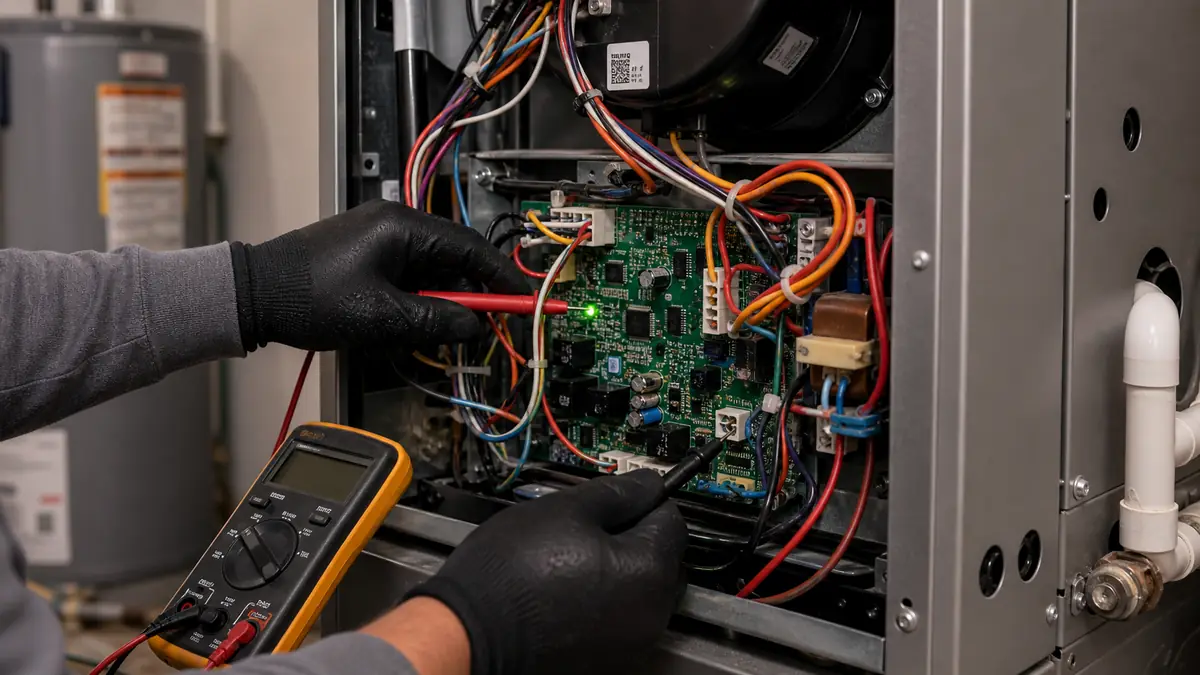
We chase draft with a meter rather than guessing. First we pull the blower door and read the stored fault history at the LED, confirming it is 31 and not a neighboring code like 13 limit or 34 ignition. Then we put a digital manometer on the pressure-switch port and start the inducer: a healthy 58-series furnace pulls roughly negative 0.6 to negative 2.0 inches of water column depending on model, and the switch is stamped with its trip point, often around negative 0.40 to negative 0.70 inches. If the inducer makes the spec vacuum but the switch will not close, the switch is bad. If the inducer cannot make the vacuum, we look upstream: we inspect the flue and both terminations for blockage, check the sensing tube and port for cracks, soot, or condensate, and on a condensing unit we pull and flush the trap. We also confirm the inducer is spinning at full speed and drawing normal amps, because a motor with worn bearings spins slow and quietly fails the vacuum test. That sequence separates a $200 switch from a $600 inducer in about fifteen minutes.
What can I safely check before calling a pro?
There are a few things a homeowner can do without opening anything dangerous. Walk outside and look at the furnace's intake and exhaust terminations; clear any leaves, snow, a bird nest, or a wasp nest you find at the PVC pipes or the chimney cap. Change a clogged air filter, because severe airflow restriction can drag the whole system into faults. If you can see the rubber sensing tube running to the pressure switch, check that it is connected at both ends and not visibly kinked or split. On a high-efficiency furnace, find the white condensate trap and confirm it is not overflowing. What you should not do is jumper the pressure switch with a paperclip or wire to force the furnace to fire, or sit there resetting the breaker over and over. Both defeat the one safety that confirms your furnace is venting, and a furnace that burns gas without proven draft can push carbon monoxide back into the house. If the flue is clear and 31 comes right back, stop and let a tech meter it.
When is a Carrier 31 code urgent?
Treat 31 as a same-day call any time the weather is cold and the furnace is your only heat, because the system is locked out and will not warm the house. It rises to urgent the moment you smell exhaust, see soot staining around the furnace cabinet or flue, or a nearby carbon-monoxide alarm chirps, since those point at exhaust spilling instead of venting; in that case shut the furnace off at the switch and call. It is also urgent if someone has already bypassed the pressure switch to keep the furnace running, which we see in older Garfield Heights rentals. That is an unsafe condition, not a repair shortcut. A 31 that only appears intermittently on the coldest mornings still needs attention soon, because an inducer or switch that is marginal today fails completely on the next hard cold snap.
What does the repair cost, and what gets replaced?
The fix tracks the cause we measure. A blocked termination, a debris-packed flue, or a plugged condensate trap is usually cleared inside the diagnostic visit, so you pay for the trip and the cleaning rather than a part. A failed pressure switch is an inexpensive, common replacement at roughly $150 to $350 installed, and we match the exact trip-point rating stamped on the original rather than installing a generic one, which matters because the wrong switch masks a real draft problem. A weak or seized inducer motor is the larger repair at about $300 to $700 with the part and labor. If the same furnace keeps throwing 31 across seasons despite good parts, the real issue is often an undersized or partially collapsed flue that never moved enough air, and we will lay out the venting correction. For deeper furnace work see our furnace repair page, and the full Carrier fault codes reference covers the neighboring lockout codes.
Common questions
What does code 31 mean on a Carrier furnace?
Code 31 means the pressure switch (or HPSR relay) did not close when the inducer started, or it opened mid-cycle, so the control cannot confirm the furnace is venting and it stops ignition. It is a draft-proving safety, not a random glitch. The usual causes are a blocked flue, a weak inducer motor, a cracked sensing tube, or a plugged condensate trap on a 90-percent furnace.
Can I clear a Carrier 31 code myself?
Sometimes, if the cause is simple. Check the intake and exhaust terminations outside for a bird nest, leaves, or a wasp nest, and look for a kinked or disconnected rubber sensing tube at the switch. On a condensing furnace, a full condensate trap will trip 31, so emptying and reseating the trap can clear it. If the flue is clear and the code returns, the inducer or switch is failing and needs a meter, not another reset.
Is a Carrier 31 code dangerous?
The code itself is the furnace protecting you: it refuses to fire because it cannot prove the combustion gases are leaving the house. That is the safe outcome. The danger is overriding it, jumping the pressure switch, or resetting in a loop forces a furnace to burn gas without proven draft, which can spill carbon monoxide. Leave the switch alone and find why draft is not proving.
How much does a Carrier 31 code repair cost in Pasadena?
Clearing a blocked flue or a plugged condensate trap is usually handled inside a standard diagnostic visit. A replacement pressure switch runs about $150 to $350 installed. A failing inducer motor, the bigger-ticket cause, runs about $300 to $700 with the part. We quote the exact number after we measure inducer draft and confirm which part is at fault.